

Perimeter security
High-Security Fencing in Las Vegas
Hardened perimeters for sites that must stay closed: equipment yards, utility sites, industrial facilities and public infrastructure. We build the fence line, the topping and the barriers as one coordinated scope.
Get a quote
Step 1 of 2
Takes about a minute. Nothing is sent until you press “Get my quote”.
Start typing — pick a suggestion or keep what you typed.
Scope
What we provide
- Heavy-gauge chain link and steel perimeter fencing
- Razor wire and barbed wire toppings
- Bollards and vehicle barriers
- Secured vehicle and pedestrian gates
- Integration with automated gates and access control
Project photos
Recent work
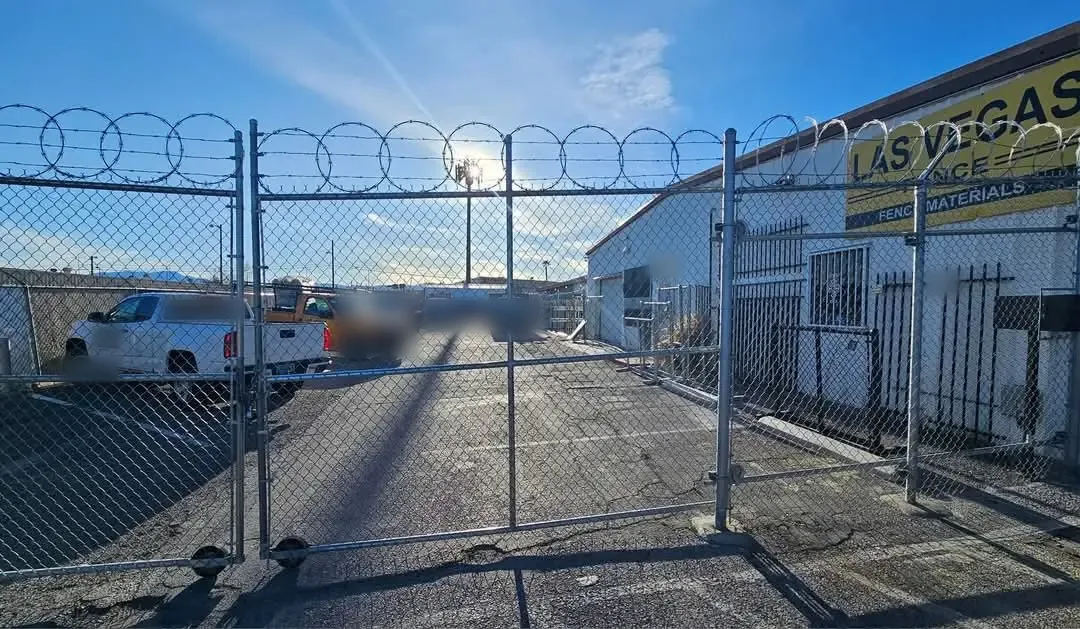
Chain link vehicle gates with coiled security wire — Las Vegas area 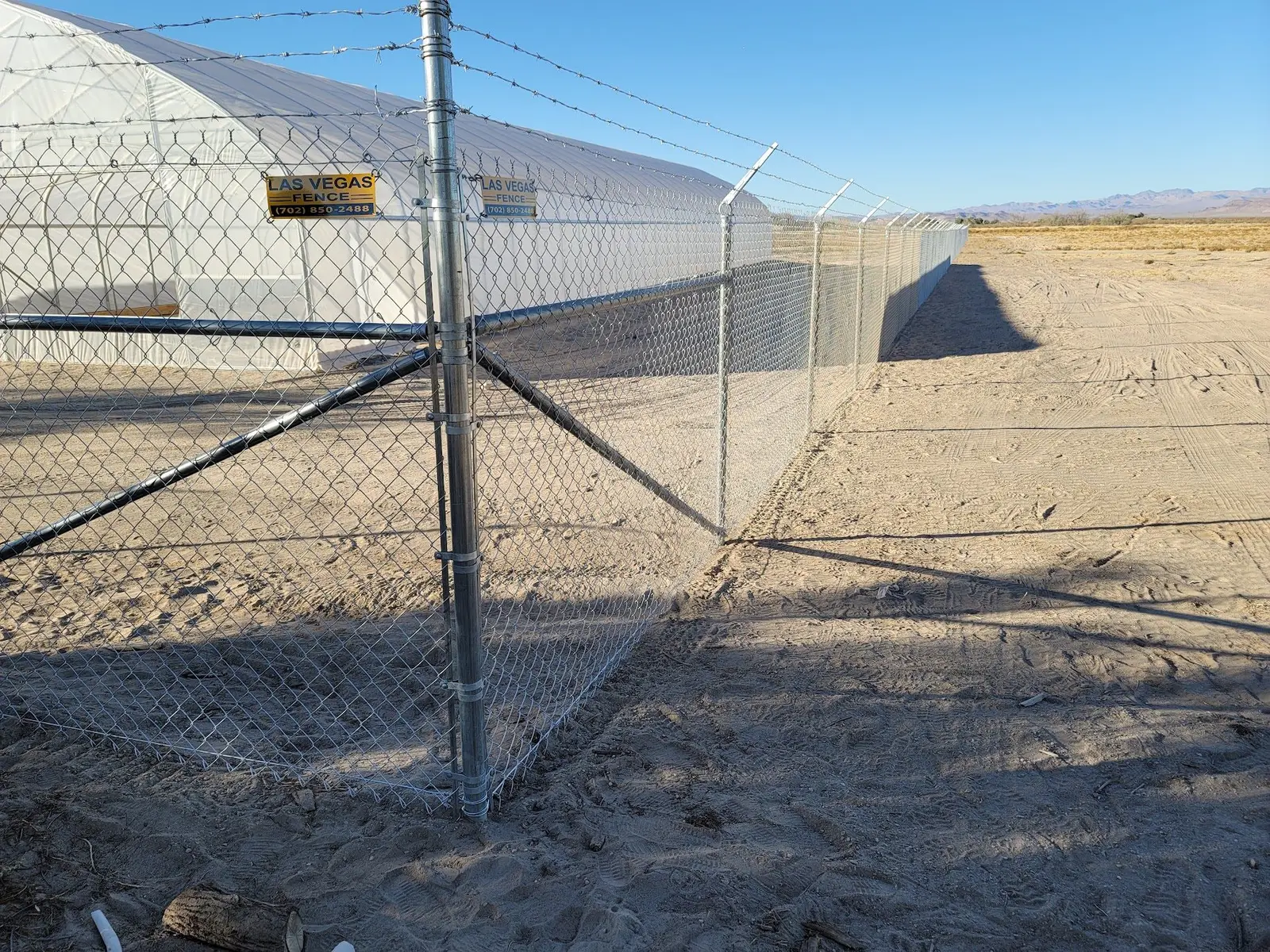
Chain link fence with barbed wire around a greenhouse facility — Las Vegas area 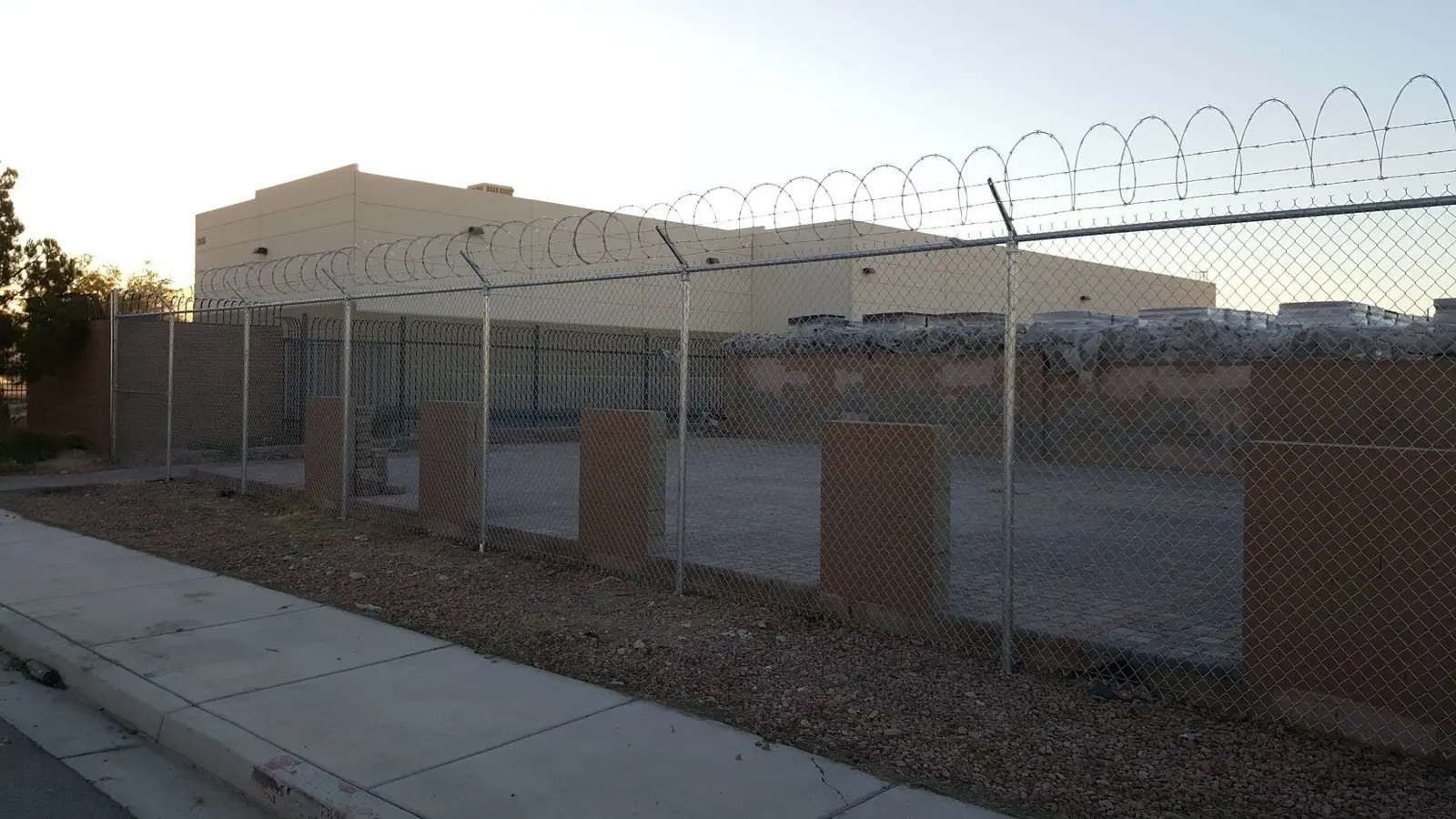
Perimeter fence with coiled security wire at an industrial site — Las Vegas area 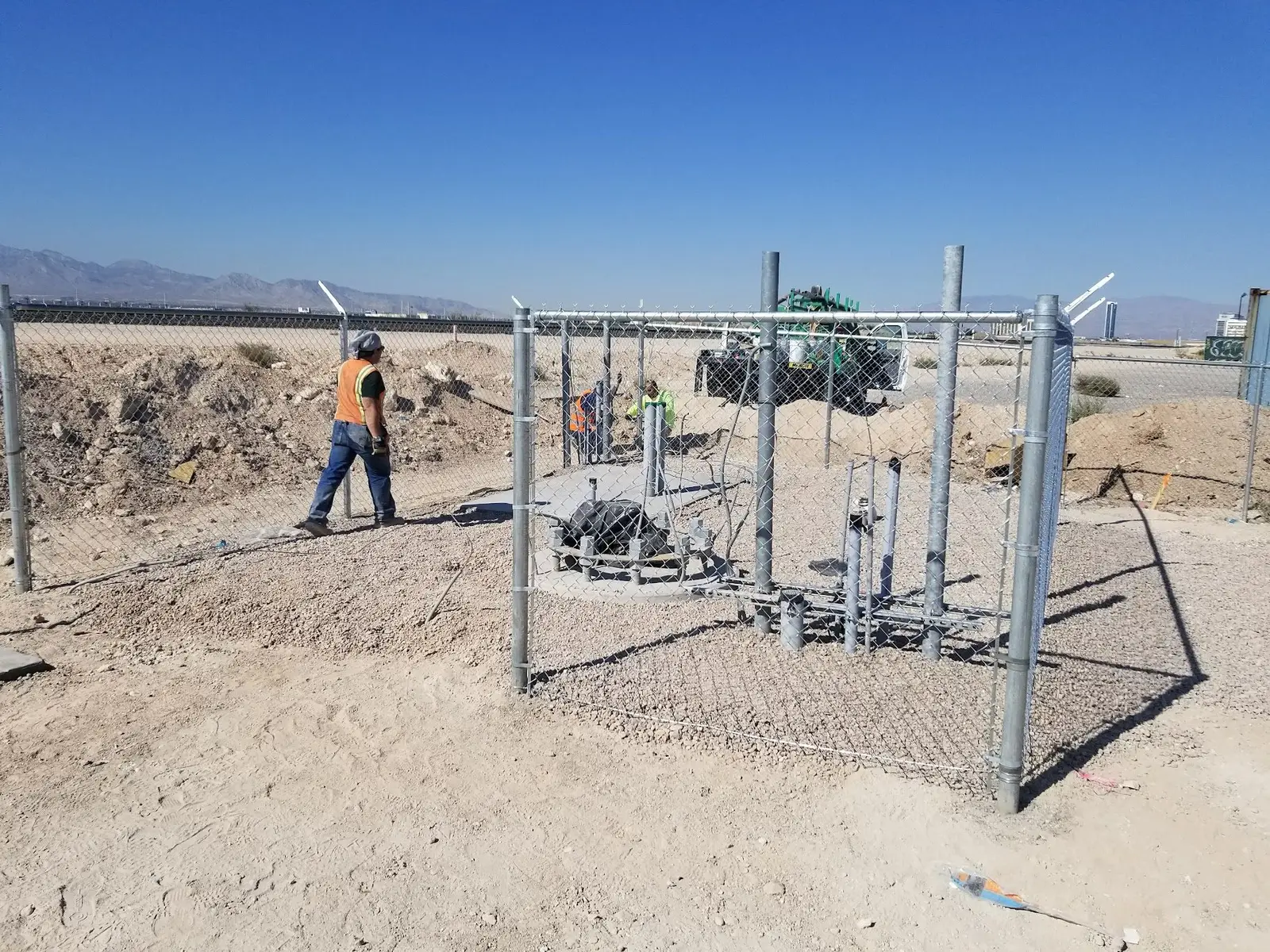
Chain link enclosure with barbed wire around site equipment — Las Vegas area 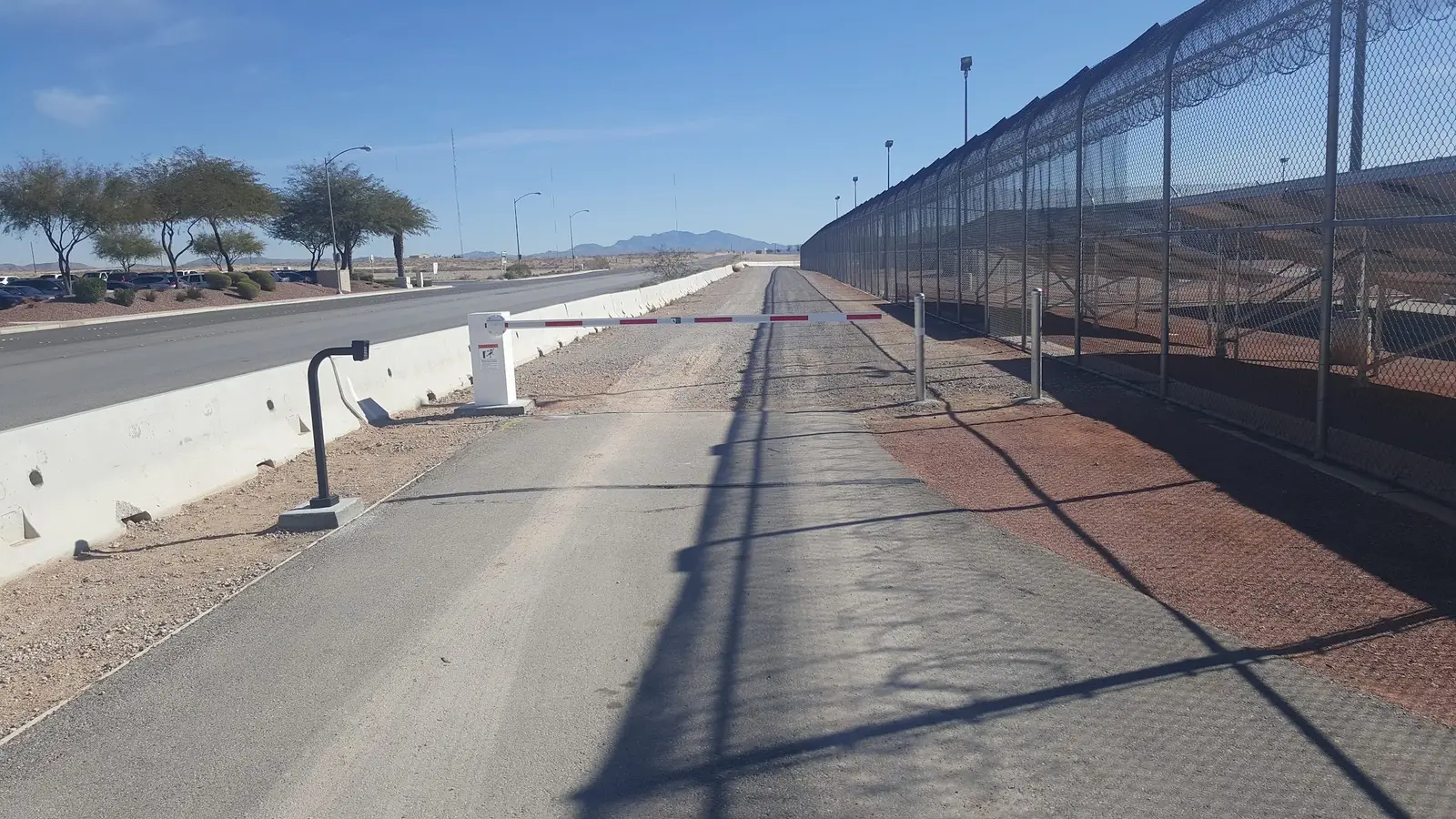
Tall chain link perimeter fence with security wire — Las Vegas area 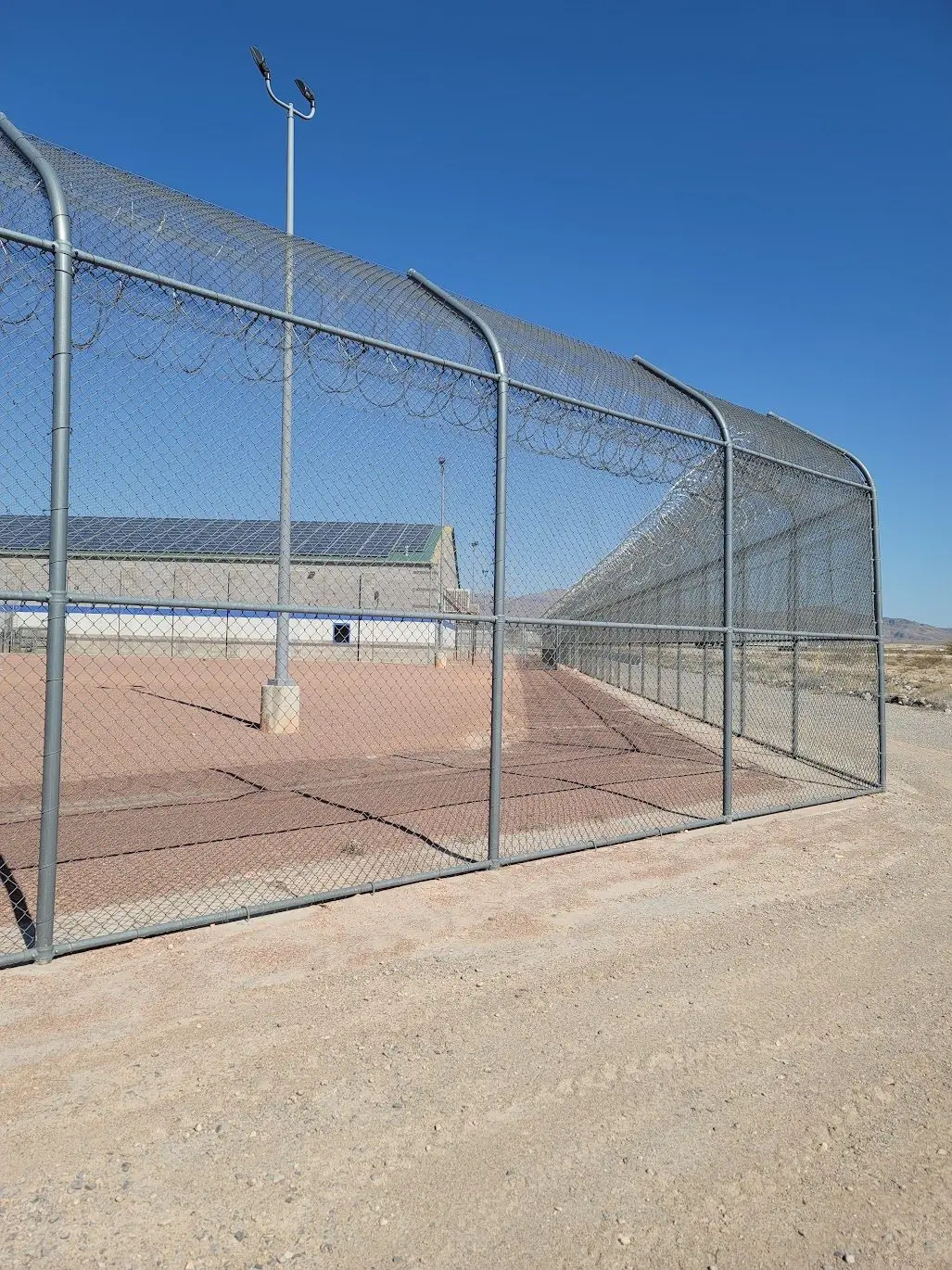
Tall perimeter fence with angled security wire — Las Vegas area
Razor wire
Razor wire adds a strong deterrent to the top of a perimeter fence. It is typically installed as concertina coils or flat-wrap panels on extension arms above the fabric line, and is specified where a site needs to resist climbing.
Razor wire fencing
Barbed wire
Barbed wire is a common, cost-conscious topping for commercial and industrial chain link. Strands are run on extension arms above the fence fabric, most often three strands on angled or vertical arms.
Barbed wire fencing
Bollards & vehicle barriers
Bollards and vehicle barriers control where vehicles can go: protecting entrances, storefronts, equipment and pedestrian areas. Fixed, removable and decorative-cover bollards are typical, along with barrier arms. Where a project specifies crash-rated systems, see crash-rated vehicle barriers.
Bollards & vehicle barriersCrash-rated barriers & perimeter security design
Anti-ram and forced-entry requirements are set by the project’s security design and the standards it cites. Our guides explain how crash ratings (ASTM F2656 M30/M40/M50 and legacy K-ratings) and forced-entry ratings (ASTM F2781) work, and what the documents must specify.
Crash-rated vehicle barriers · Perimeter security design
Crash ratings explainedPlanning a secure perimeter
A perimeter is only as strong as its weakest point. We look at gates, grade changes, drainage crossings, adjacent structures and the transitions between fence types, and we coordinate the gate and access-control scope so the whole line works together.
- Fence height and topping per specifications and code
- Bottom tension wire, rails or grade beams to limit crawl-under
- Gate hardware and locking compatible with the security level
- Clear zones and sight lines where required
FAQ
Common questions
Can razor wire or barbed wire be added to an existing fence?
Often, if the existing posts and framework can carry extension arms and the local code allows a topping at that height. We assess the existing fence before recommending it.
What makes a gate or barrier crash-rated?
A crash rating (ASTM F2656) belongs to the manufacturer’s tested system, including its foundation and installation details. Changing a component or the foundation can void the rating, so any substitution goes through the design team.
Related
Related services, industries & projects
Services


Ready to start?
Get a quote for your site.
Tell us what you need and where. We will follow up to scope the work.